





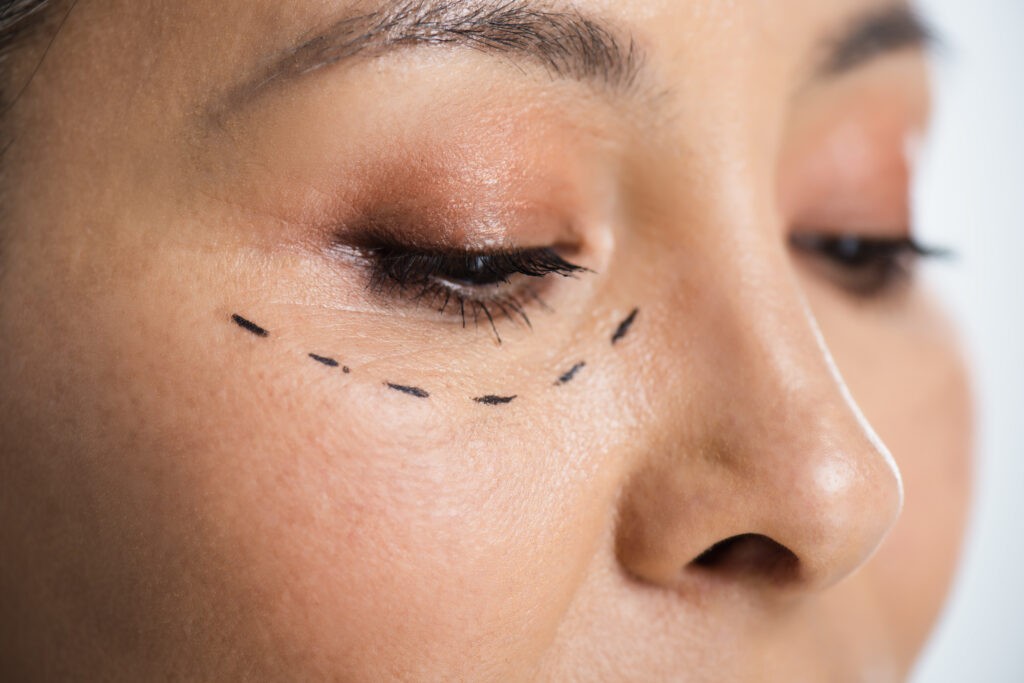
Why is blepharoplasty performed?
Ageing, genetics and lifestyle factors can lead to the following changes in the eyelids:
• Sagging of the skin on the upper eyelid
• Excess skin on the eyelid
• The formation of bags and puffiness on the lower eyelid
• Looseness and deepening of wrinkles on the lower eyelid
• A tired, sad appearance
• A partial narrowing of the field of vision
Upper eyelid blepharoplasty
By removing the excess skin and fatty tissue from the upper eyelid:
• the eyes appear more open,
• the drooping of the upper eyelid is corrected,
• make-up is easier to apply,
• a younger and more alert look is achieved.
As the incisions are made in the natural crease of the eyelid, the scars are almost invisible.
Lower eyelid blepharoplasty
The main problems with the lower eyelid:
• The formation of bags
• The protrusion of fat pads
• Loosening and sagging of the lower eyelid skin
• The deepening of wrinkles
During
lower blepharoplasty, excess fat tissue is redistributed or removed,
the skin is tightened, and the contour of the lower eyelid is improved.
Who is the procedure recommended for?
Blepharoplasty is recommended if:
1. Excess skin on the upper eyelid is weighing down the eye
2. There are bags and puffiness on the lower eyelid
3. If the eyes appear tired
4. If drooping of the upper eyelid reduces the field of vision
5. If wrinkles and skin laxity are excessive
6. If make-up does not sit properly
How is the procedure performed?
• The procedure is performed under intravenous or local anaesthesia
• It takes approximately 1 hour
• The incision for the upper eyelid is made in the natural crease,
and for the lower eyelid, it is made along the lash line or on the
inside of the eyelid
• Excess skin and fat tissue is removed or reshaped
• The eyelids have a more youthful and firmer appearance
Discharge from hospital is possible on the same day as the operation.
Recovery period
• Swelling and bruising can last for 2 weeks
• Sutures are usually removed on day 5–7
• Recovery takes 4 weeks
• Eye make-up can be applied after 2 weeks
• It is recommended not to rub your eyes and to protect them from the sun
The final result settles down completely within 6 months.